How to Spot Water Under Floorboards Before It Rots (A Homeowner’s Guide)
Water under floorboards is one of those problems that starts quietly and ends expensively. By the time you notice the buckled boards or the musty smell creeping through the house, the damage is often already deep. On the Sunshine Coast, where humidity sits high and storm events are common, water damage floorboards is something we see every week. The good news? If you catch it early, you can save your floor. If you don’t, you’re looking at rot, mould, and a bill that stings. This guide walks you through exactly what to look for and what to do. And if you need help right now, our sub-floor drying services are available around the clock.
How Does Water Get Under Floorboards?
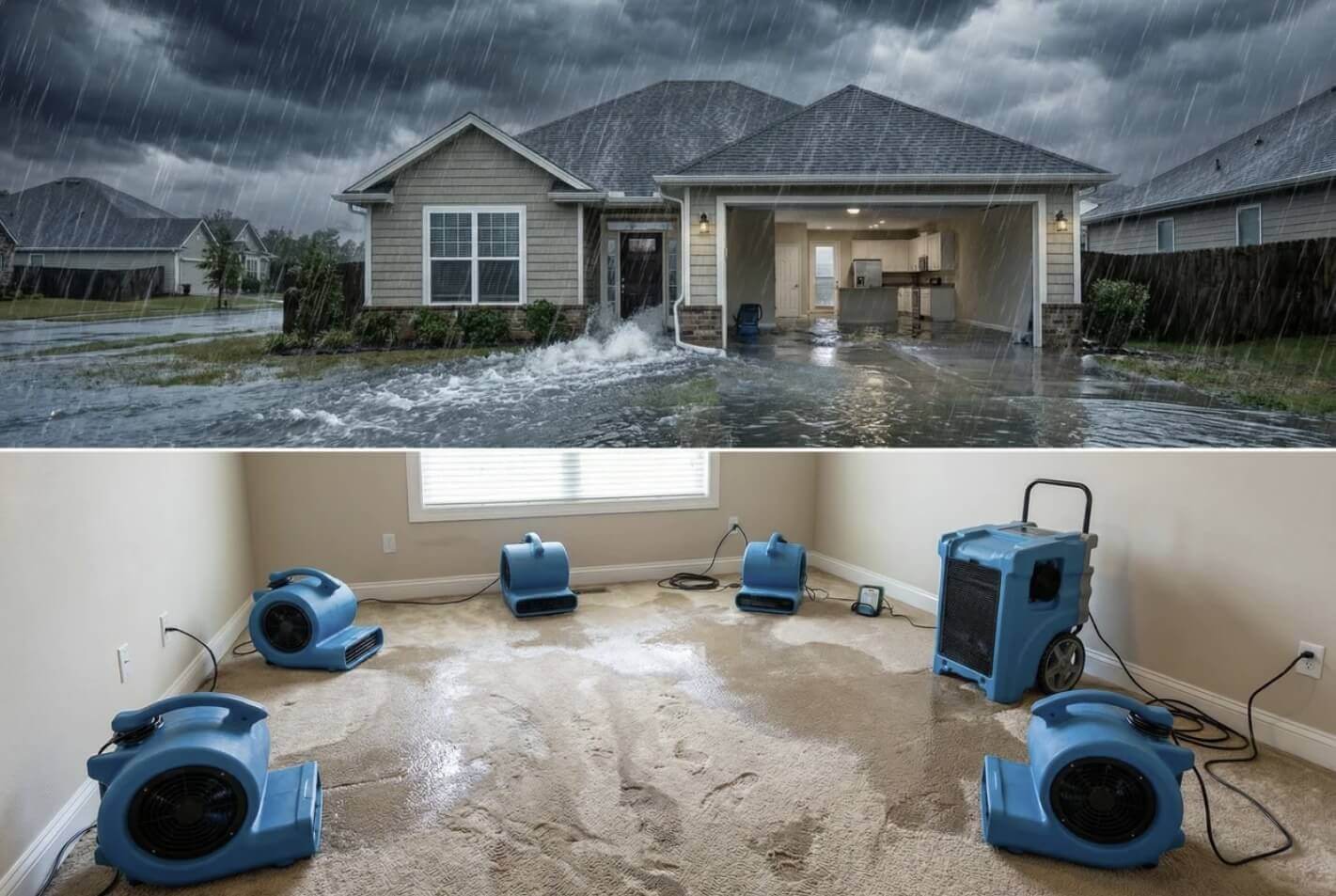
Most homeowners assume water under floorboards means there’s an obvious leak somewhere. Often, there isn’t one. In fact, water under floorboards but no leak is one of the most common scenarios we respond to. Moisture finds its way in through several pathways, and some of them are completely silent.
Flooding and Storm Surge
The Sunshine Coast is no stranger to heavy rain events and flash flooding. When stormwater overwhelms drainage systems, it doesn’t just pool on the surface. It seeps into crawl spaces, saturates subfloor structures, and gets trapped beneath your timber floors. Even a brief inundation can leave moisture locked under boards for weeks if it’s not properly extracted and dried.
Plumbing Leaks
A slow leak from a supply line, a dishwasher hose, or a bathroom waterproofing failure can drip undetected for months. By the time you notice something is wrong on the surface, the subfloor beneath has absorbed a significant amount of moisture. These are the jobs where the visible damage rarely reflects the full extent of what’s happening underneath.
Rising Damp from the Ground
In older Queenslander-style homes and properties with inadequate subfloor clearance, groundwater can wick upward through the soil and into the subfloor cavity. Rising damp tends to be slow and persistent. It doesn’t arrive in a rush; it saturates gradually, which makes it easy to miss until the damage is advanced.
Condensation and Humidity
This one surprises people. In our climate, the temperature differential between a cooled interior and a warm subfloor can generate condensation beneath the floor. Poor subfloor ventilation compounds the problem significantly. Over time, that accumulated moisture behaves just like a slow leak. The timber absorbs it, swells, and starts to break down.
5 Signs of Water Damage Under Your Floorboards
Knowing the signs of water damage on hardwood floors could be the difference between a drying job and a full floor replacement. Some of these are obvious. Others are easy to dismiss as normal wear. Don’t.
Sign 1 – Buckling or Cupping Floorboards
When timber absorbs moisture, it expands. Boards that were once flat start to curl at the edges (cupping) or arch upward in the centre (crowning). If you run your hand across the floor and feel ridges or dips where there were none before, that’s a clear signal that moisture is present. Cupping in particular is almost always moisture-driven.
Sign 2 – Spongy or Soft Spots When Walking
Walk slowly across your floor and pay attention to how it feels underfoot. A floor that gives slightly, feels springy, or shifts when you step on it is telling you the subfloor beneath has been compromised. This is a structural concern, not just a cosmetic one. Softness underfoot means the material has lost integrity, often due to prolonged saturation.
Sign 3 – Musty Odours
If a room smells stale or damp without an obvious cause, trust your nose. Stagnant water under floorboards creates the exact conditions mould and bacteria need to thrive. That musty smell is often the first sign you’ll notice, appearing well before any visible damage surfaces. Don’t mask it with air freshener. Investigate it.
Sign 4 – White Salt Stains or Discolouration
White powdery residue on or between boards, known as efflorescence, is a sign that moisture has been moving through the material and leaving mineral deposits behind. Dark staining along board edges is another common indicator. Both suggest that water has been sitting beneath the surface for long enough to discolour the timber or draw salts upward from the subfloor.
Sign 5 – Mould Growth Between Boards
Visible mould between or along the edges of floorboards is a serious sign. It means moisture has been present long enough for biological growth to establish. Mould spreads quickly in our climate and is not a surface problem. It penetrates into the timber, the subfloor, and surrounding materials. If you can see mould on your floor, contact our mould remediation services without delay.
Will Water Under Floorboards Dry Out on Its Own?
This is one of the most common questions we’re asked. Homeowners notice a problem, hope it will resolve itself, and wait. It’s an understandable instinct. But when it comes to moisture trapped beneath flooring, waiting is almost always the most expensive decision you can make.
Why It Won’t Dry Naturally
Will water under floorboards dry out without intervention? In most cases, no. Subfloor cavities are enclosed, poorly ventilated spaces. Evaporation is minimal. The moisture that enters gets trapped, and the timber above keeps absorbing it. Even when the source of the water is gone, residual moisture in the subfloor material, insulation, and joists can persist for weeks or months without active drying.
The Hidden Danger – Mould and Rot
Within 24 to 48 hours of moisture becoming trapped, mould can begin to establish. Timber rot follows prolonged exposure. Both are insidious because they’re hidden from view. By the time they become visible, the damage is already extensive. A floor that looked fine last week can be structurally unsound by the time you notice the smell. Our mould inspection and remediation team can assess the full extent of biological damage and treat it before it spreads further.
The 48-Hour Rule
Industry best practice is clear: the first 48 hours after water is discovered are critical. Flooding and water damage restoration outcomes improve dramatically when professional drying begins within this window. Beyond 48 hours, the likelihood of mould establishment, timber swelling, and subfloor deterioration increases sharply. If you’ve found moisture under your floor, the time to act is now, not after the weekend.
How to Dry Water Under Floorboards
Understanding how to dry water under floorboards properly is not as simple as opening a window and waiting. Here is a step-by-step approach that gives your floor the best chance of recovery.
Step 1 – Identify the Source
Before anything else, find out where the water is coming from. Stop any active leaks. Turn off water supplies if a plumbing failure is suspected. Stormwater intrusion may require drainage assessment. If you cannot identify the source, do not skip this step. Drying a floor while it continues to take on moisture is futile.
Step 2 – Remove Standing Water
Any standing water visible on or near the floor surface must be removed immediately. This is not a job for towels and a mop. Professional water extraction uses industrial-grade equipment to remove water from surface areas, gaps between boards, and accessible subfloor cavities far more effectively than any household method.
Step 3 – Use Dehumidifiers and Air Movers
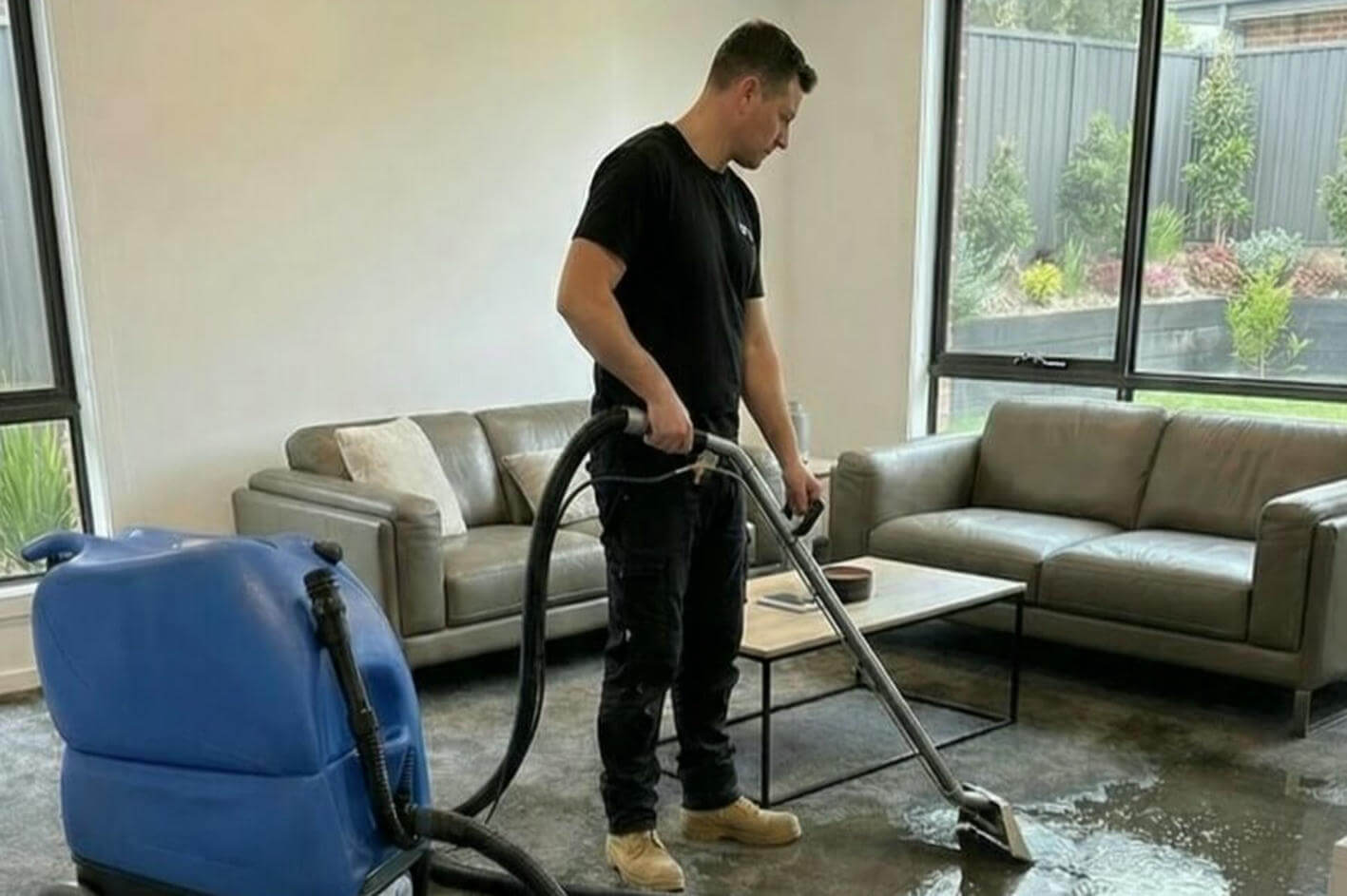
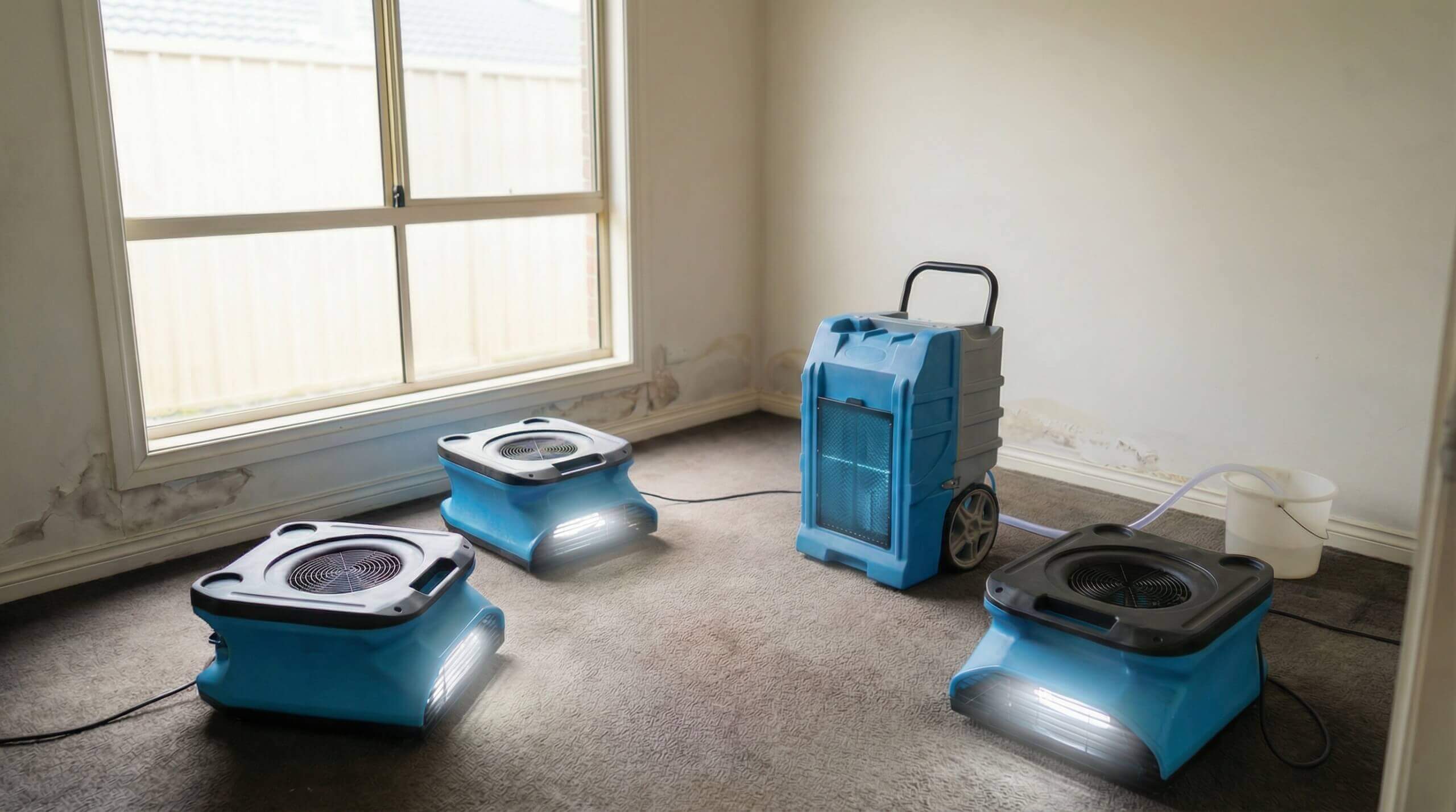
Once standing water is removed, the drying process begins in earnest. Commercial dehumidifiers pull moisture from the air and from within building materials. Air movers circulate air to accelerate evaporation and prevent moisture from settling. This equipment needs to run continuously, often for several days. If you need equipment on-site quickly, our dehumidifier hire Sunshine Coast service can get you set up fast.
Step 4 – Remove and Replace Damaged Boards
In cases where boards have cupped, buckled, or developed mould, they may need to be lifted to allow the subfloor to dry properly and to assess the extent of damage below. Boards that have warped significantly, delaminated, or show biological growth are unlikely to be restorable. Replacement is often the only sound option for those sections.
Step 5 – Call a Professional for Sub-Floor Drying
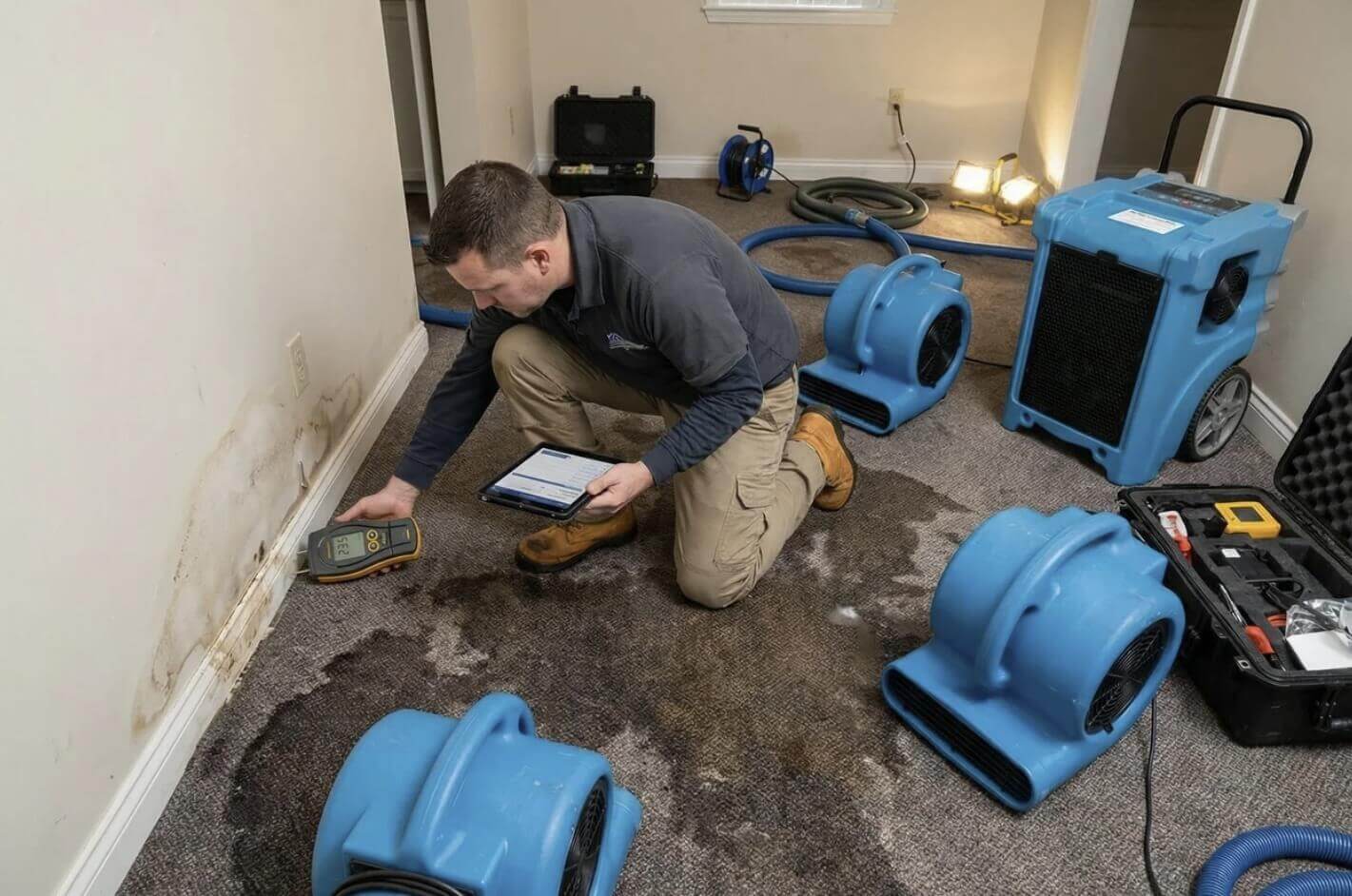
Sub-floor drying is a specialised process. It requires moisture mapping, targeted drying equipment, and ongoing monitoring to confirm that moisture levels return to acceptable ranges. Professional sub-floor drying ensures that the entire system, timber, subfloor sheeting, joists, and insulation, is dried correctly. Without this, surface repairs will fail.
What to Do If You Find Water Under Floorboards
Water under floorboards: what to do first comes down to one rule. Act immediately.
Here is the short version:
- Stop the water source if you can identify it.
- Document the damage with photos before moving anything.
- Remove standing water as quickly as possible.
- Do not walk repeatedly over affected areas or attempt to sand and repair before drying is complete.
- Call a professional water damage restoration team.
Do not wait to see if the problem resolves itself. Do not attempt full repairs before the floor and subfloor are confirmed dry through moisture testing. And if there is any sign of mould, flooding, or structural softness, do not treat this as a DIY job.
We are available 24 hours a day, seven days a week. If you’ve found water under your floor, call us 24/7 on 07 5391 3572 for an emergency flood response, and we’ll be on-site fast.
Frequently Asked Questions
Will water under floorboards dry out on its own?
Rarely. Enclosed subfloor spaces have minimal airflow, which means evaporation is insufficient to remove moisture effectively. Without active drying equipment, trapped moisture can persist for weeks and cause mould, timber rot, and structural damage in the process.
How do I know if water is under my floorboards?
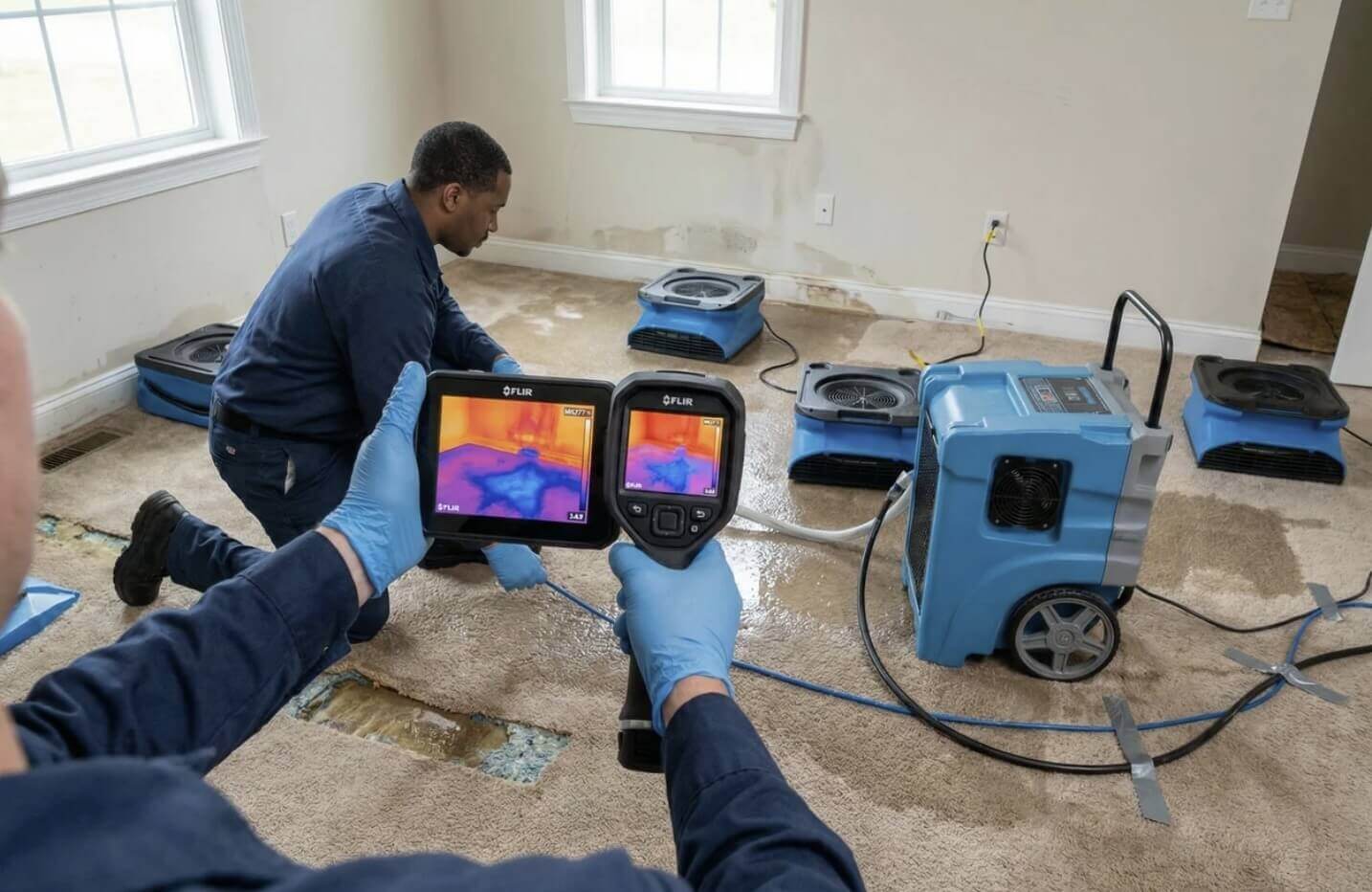
Look for cupping or buckling boards, soft or springy spots when walking, musty odours, white salt staining, or visible mould between boards. A professional moisture inspection using thermal imaging and moisture meters can confirm hidden moisture even when surface signs are absent.
Can water under floorboards cause mould?
Yes. Mould can begin to grow within 24 to 48 hours when moisture is trapped beneath flooring. The subfloor environment, dark, warm, and humid, is ideal for mould to establish and spread. Once present, it requires professional treatment to fully remediate.
Is water under floorboards covered by insurance?
Many home insurance policies cover sudden and accidental water damage, such as burst pipes or storm events. Gradual damage caused by long-term leaks or rising damp is typically excluded. Check your policy promptly and contact your insurer as soon as damage is discovered. For guidance on the claims process, visit our flood insurance claims Sunshine Coast page.
Act Before the Damage Runs Deeper
Water under floorboards does not get better with time. It gets worse, quietly and quickly. On the Sunshine Coast, where our climate accelerates every stage of moisture damage, early detection and rapid response are everything. The signs are there if you know what to look for: the soft spots, the smell, the boards that weren’t cupped last month. Trust them. If something feels off about your floor, it probably is.
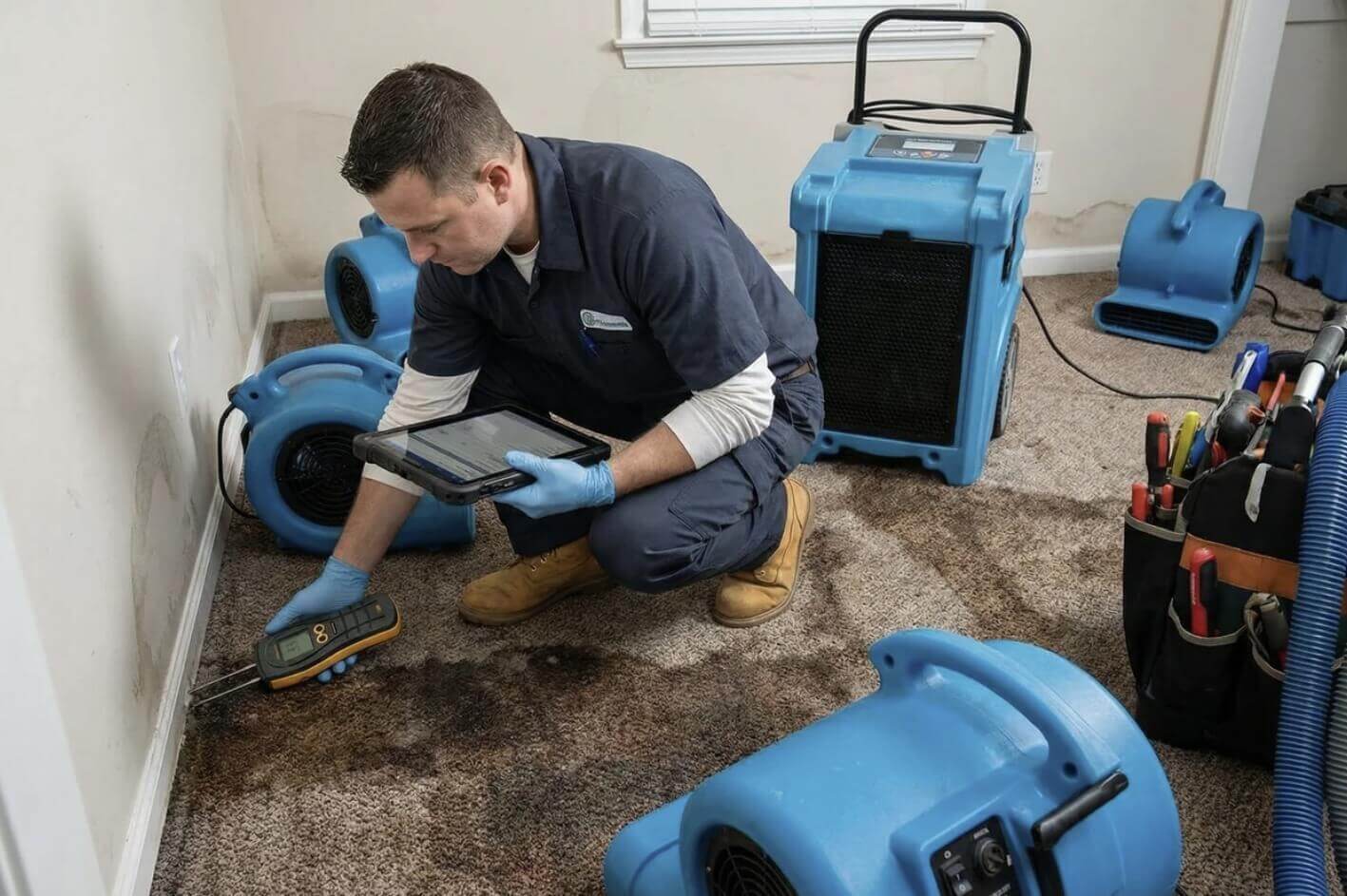
Our team at Flood Services Sunshine Coast has responded to hundreds of water damage and sub-floor drying jobs across the region. We know what works, we know how to find moisture that can’t be seen, and we know how to get your floor back to where it needs to be. If you’ve spotted any of the signs in this guide, don’t wait. Contact us for a free assessment and let’s get ahead of it before it costs you far more than it should.